How to Calculate Your ROI on a Portable Standing Seam Machine
This article will help you calculate your ROI using a portable standing seam machine. Because if you’re buying factory panels for your roofing jobs, you’re likely throwing money away that could be feeding your bottom line.
/Rick Zand/12 min read
How much return on investment (ROI) could you see owning a portable rollformer and running your own panels instead of buying factory-made?
This article will help you calculate your ROI using a portable standing seam machine. Because if you’re buying factory panels for your roofing jobs, you’re likely throwing money away that could be feeding your bottom line.
But there are a few factors to consider when comparing the ROI of running your own panels on a portable standing seam machine versus buying factory-made panels.
In this article, we’ll show you exactly how much you can save.
While there’s no exact formula for how quickly your portable rollformer will pay for itself, as it depends on the number and sizes of jobs you complete, some contractors have seen their machines pay for themselves in one or two large jobs. However, depending on the size of your operation and the number of jobs you take on, it could take longer.
On average, if you paid $160,000 for your rollformer and accessories, and you’re making an ROI of $1.63 (see example in the following section) per sq. ft., then you’d need to run about 98,000 sq. ft. of panel to pay off the machine. That would break up to about 8,166 sq. ft. per month to pay it off in a year, or 4,100 sq. ft. per month over two years, etc. So, the payoff time just depends on the volume you’re producing.
Also, if you’re financing, you can make manageable monthly payments to fit your budget. NTM can help you with financing your machine. Find out how.
Your rollformer will pay for itself through:
Faster turn-around times on jobs
Increased number of jobs
Production control= less waste
Increased savings vs. buying factory panels
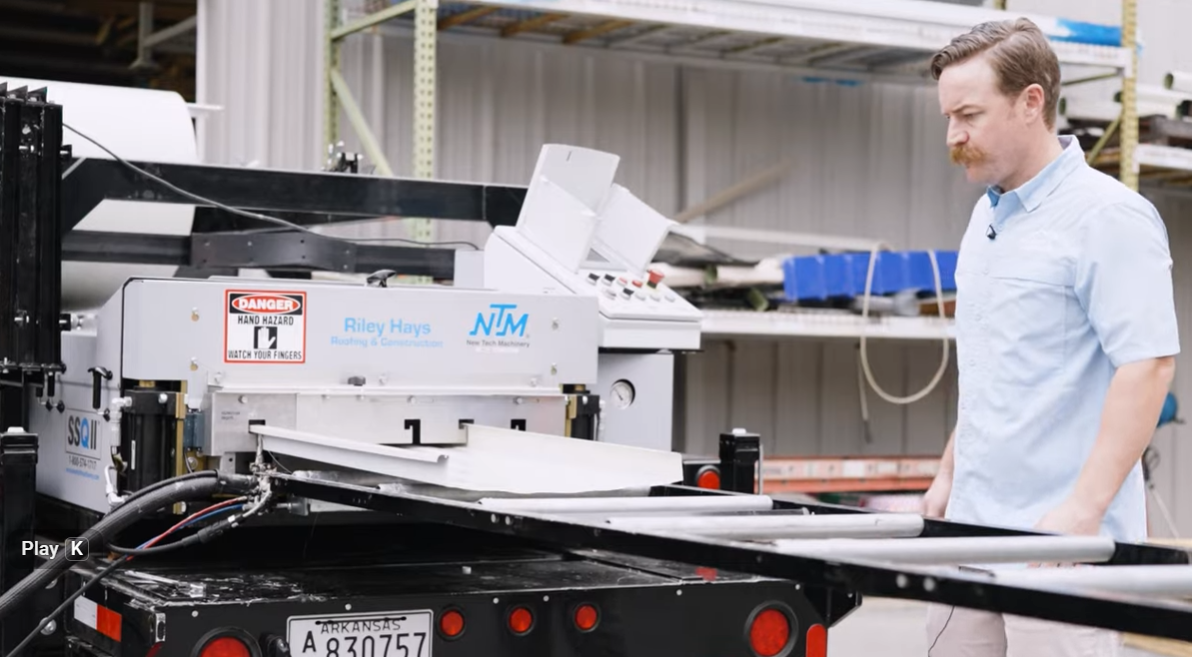
New Tech has helped me grow a lot by the fact that we can produce way faster and way more efficiently, with less cost than anybody else in our area.
Riley Hays, Riley Hays Roofing & Construction.
How Much Can I Save Running My Own Panels?
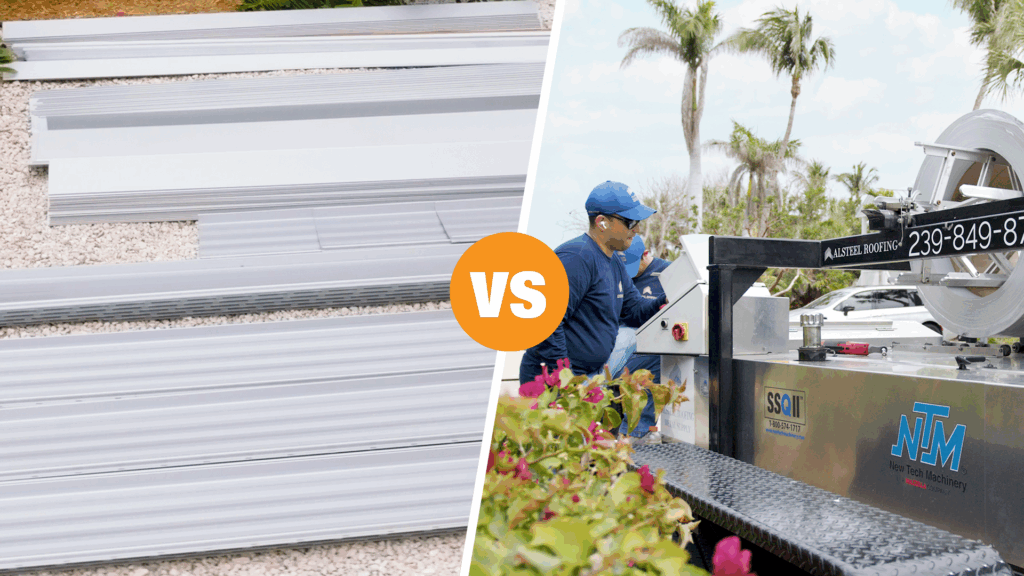
When you purchase factory panels, you’re paying for their labor, material, overhead, and sales markup.
Rolling your own panels on a portable standing seam machine means that those costs turn into ROI. If you’re paying $4.50 per linear foot from a distributor, but can run that same panel with a portable rollformer for half the cost, that’s a savings of $2.25 per linear foot.
Calculation
Use this Portable Rollforming Calculator to figure out how much you can save on a single job running your own panels with a portable rollformer. If possible, use figures from an actual job.
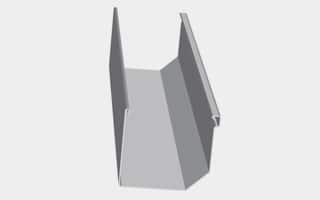
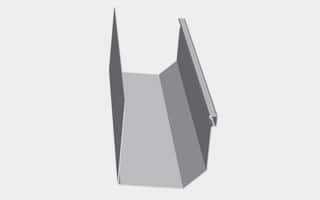
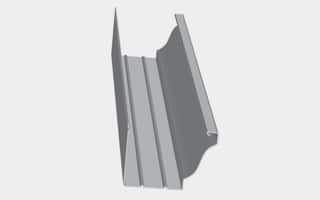
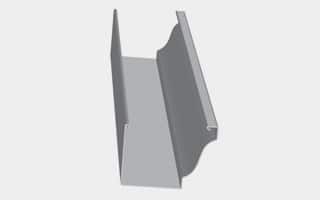
If you don’t own an NTM machine, choose one that matches the profile you want to use. You can refer to this chart:
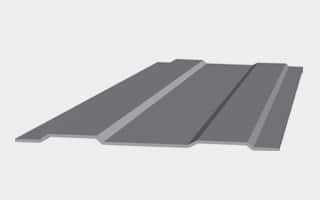
FWQ100 1″ Flush Wall/ Soffit/ Underdeck Panel with Adjustable Reveal
✓
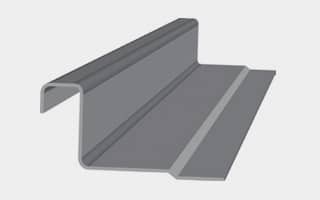
FWQ150 1.5″ Flush Wall/ Soffit/ Underdeck Panel with Adjustable Reveal
✓
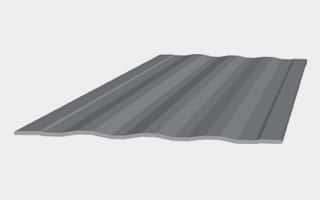
BBQ750 0.75″ Board & Batten Wall Panel Profile
✓
Here’s an example of ROI using our Portable Rollforming Calculator:
Machine: You own an SSH™ MultiPro Roof Panel machine.
Total square footage of roof: Your project is for a 3,500 sq. ft. metal roof.
Panel type: Your customer chose an SS150 1.5” mechanical seam profile.
Coil width: You need a 20” coil width to produce 16” panels (minus 4” to form the panel).
Waste factor: Your crew is experienced, but not perfect. You expect around 17% material waste.
Coil selling price: Your coil supplier charges $1.90 per sq. ft.
Fabrication labor cost per hour: One person could run the whole panel operation, but you’ll hire an extra hand to help stack the panels. Let’s say $35 per hour for both.
Cost of factory panel: A local distributor quoted you $4.50 a sq. ft. for the same profile.
Results:
You saved $1.63 per sq. ft.
In total, you saved $5,705 using your SSH™ MultiPro.
That’s a significant savings. However, one operational cost we haven’t addressed is shipping, as, like factory panels, coil also requires shipping.
Our time savings by pushing panels out of the machine ourselves versus ordering pre-made panels is enormous.”
Riley Hays, Riley Hays Roofing & Construction
Are Shipping Costs Different for Coil Vs. Factory Panels?
Yes. Shipping coil is about a third the cost of shipping factory panels, and here’s why.
The cost difference between shipping raw coil and factory-made panels comes down to space. Freight carriers charge based on how much space you take up versus how much you weigh.
For your 3,500 sq. ft. roof, with 17% waste, you order 4,095 sq. ft. of coil (approx. 4,100 lbs). Here is how the shipping costs typically break down.
1. Shipping Factory-Made Panels (The “Expensive Air” Problem)
Packaging: Panels must be crated or palletized. A 3,500 sq. ft. panel order will likely require three to five large crates.
Length Issues: If your panels are over 20–25 feet, they cannot go on a standard LTL (Less-Than-Truckload) van. You are forced into a dedicated flatbed or a “wide-turn” carrier, which will significantly add to the cost.
Freight Class: Finished panels have a high freight class because they are fragile and bulky.
Estimated Cost $1,500 – $3,500+
Note: If the panels come from a distant hub, the “deadhead” miles for a flatbed can get very pricey.
2. Shipping Metal Coil (The “Dense Weight” Advantage)
Coil is one of the most efficient things to ship in the freight world.
Packaging: It sits on a heavy-duty “eye-to-the-sky” or “eye-to-the-side” pallet. It takes up a tiny footprint (usually 4′ x 4′) on a truck.
Weight vs. Space: You are shipping 4,100 lbs. in a 16 sq. ft. space. Carriers love this because they can stack other freight around it.
Standard LTL: Because it’s compact, it can often ship on a standard 53-foot van with a liftgate (if you have a forklift to offload).
Estimated Cost: $500 – $1,200, depending on proximity.
Note: Distributors like Sheffield Metals have hubs across the country. You are more likely to find a coil source closer to you than a specific panel manufacturer, further dropping the cost.
3. Comparison Summary
Feature
Factory Panels
Metal Coil
Space Used
20′ – 40′ of trailer bed
4′ of trailer bed
Handling
Fragile (easy to dent/scratch)
Durable (protected by outer wrap)
Equipment
Often requires a Flatbed
Standard Box Truck / LTL
Offloading
Requires long-fork extensions
Standard Forklift
Estimated Freight
$0.40 – $0.90 per sq. ft.
$0.12 – $0.30 per sq. ft.
The “Hidden” Shipping Benefit of Coil
If you buy the coil, you can often job site deliver the coil much easier than panels.
Panel Delivery: If a 40-foot flatbed can’t get up a residential driveway, you have to offload at a hub and “hotshot” the crates to the site, which doubles your cost.
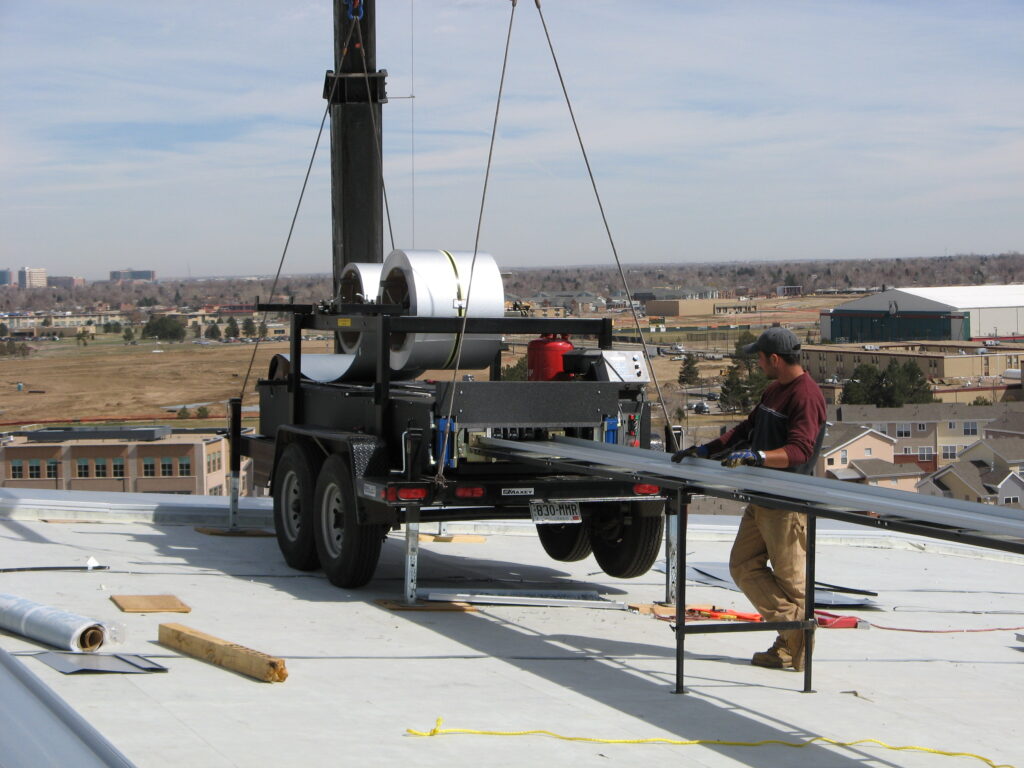
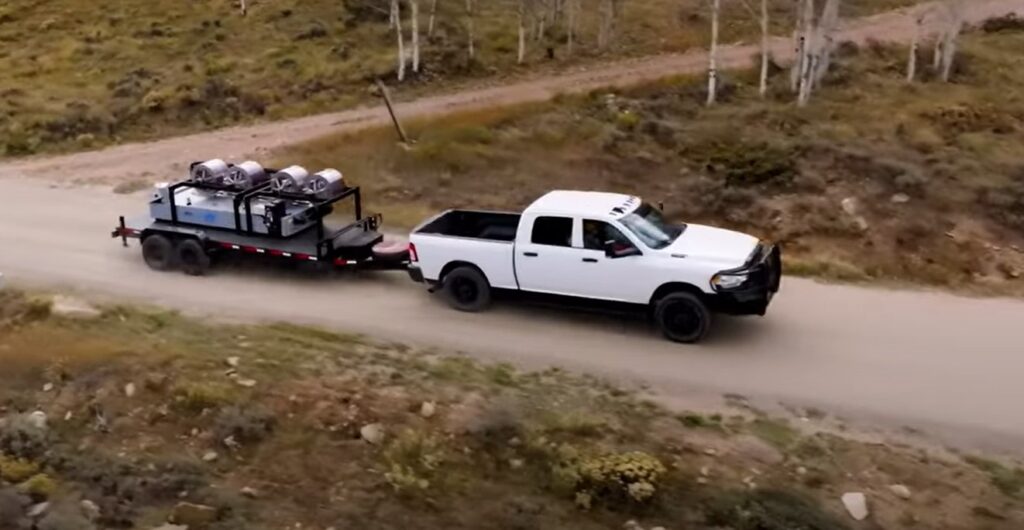
Coil Delivery: You can have the coil delivered to your shop, load it onto your rollformer, and drive it right to the job site.
The bottom line: You will likely save $1,000 to $2,000 in freight alone by shipping coil instead of finished panels for your 3,500 sq. ft. roof job.
That’s a total savings of up to $7,705 on this single job, adding in the previously calculated ROI.
If you had four jobs this size every year, that would add up to $30,820 in a single year. That doesn’t include the profit you’re making on the job itself.
How Else Can I Increase My ROI with a Portable Rollformer?
Using a portable rollformer will increase your ROI on the job site, but owning your own machine can open other revenue streams to increase your profits even more.
Let’s say you’re running your panels at the job site and have a crew installing them. In this case, you have complete control of your operation, from manufacturing to job completion.
More control means:
Greater efficiency—scale up your operation and increase productivity, saving time and money.
Faster fixes—if a panel runs out the wrong length or suffers damage, you can run another. No waiting weeks on a replacement.
Less time on the job site—quicker turnaround means you can take on more jobs, feeding your bottom line.
Not relying on third-party distributors—control your own production and inventory. No factory or transportation delays means jobs get finished faster.
You save time not having to wait on often unreliable suppliers. One contractor finished a three-year resort complex job in half the time. He freed up another year and a half to take on more jobs.
And if you don’t have jobs lined up?
You have 100% autonomy and control of your own destiny.
Riley Hays, Riley Hays Roofing & Construction
If you don’t have another job to book, you can consider chop-and-drops. Take your portable standing seam machine to a contractor’s job site, run the panels, and leave them for their crew to install. Wouldn’t that contractor rather have someone local running panels right on site rather than relying on a national distributor? You’ll save them time and money.
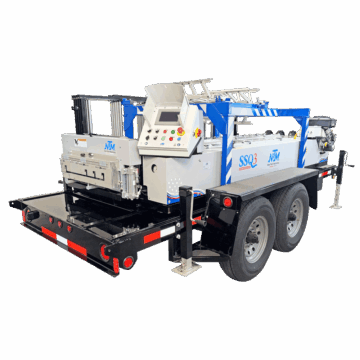
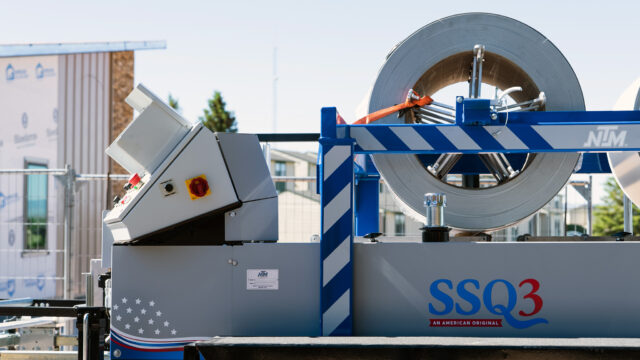
And that’s money you’re making during what might have been downtime for your operation. You could even purchase another profile tooling to accommodate contractors installing profiles you’re not, like underdecking or board & batten siding, or other popular residential or commercial profiles (depending on your machine’s profile capabilities. Our flagship SSQ3™ MultiPro Roof & Wall Panel machine can run 16 optional profiles).
How do I estimate how fast the machine will pay for itself?
You’re basically backing into a break-even production number:
Savings per sq. ft. = (Factory panel cost) − (Your in-house cost to run panels) Sq. ft. to break even = (Total machine + accessories cost) ÷ (Savings per sq. ft.)
The example shows how the math works in the real world (and why “payback time” comes down to your monthly volume).
Is shipping cheaper for coil than factory panels?
Generally, yes—because freight pricing is heavily influenced by space/volume, not just weight.
Factory panels typically require long crates, more trailer space, and can force specialty freight (especially when panels are 20–25 ft.+). Coil ships compact (small footprint), usually rides standard LTL easier, and is less prone to shipping damage.
Bottom line: freight can be a meaningful part of ROI, so don’t leave it out of your comparison.
How much do waste and labor change the ROI?
A lot—because they hit your “true” cost to manufacture panels.
Waste factor: If you’re new to running panels (or the job is complex), be honest about scrap. Underestimating waste can make ROI look better on paper than it is. Labor: If one operator can run production but you still need help stacking/handling, include that fully loaded cost. If you want a conservative ROI number, run the math twice: once with your “best case” waste/labor and once with your “realistic” waste/labor.
Besides my own jobs, how else can I increase ROI with a portable rollformer?
If your crew isn’t booked solid year-round, the article calls out a practical option: chop-and-drops (you bring the machine to another contractor’s job, run panels on site, and leave them for install).
Other ROI levers include:
Running additional profiles/tooling so you can serve more job types (roof, wall, underdeck, etc.)
Reducing downtime from damaged/wrong-length panels (rerun immediately instead of waiting on replacement panels) If you’re trying to match a machine to the profiles you want to sell/run, start with the Roof Panel Machine Quiz.
I’m Ready to Increase My ROI with a Portable Rollformer. Where Do I Start?
If you’re ready to take control of your operation and run your own panels, we have everything you need.
You’ll want to talk to one of our experienced account managers about your options. You can also take our machine quiz to find out which NTM portable rollformer is right for your business.
We also have financing options available. You can build and finance your machine all in one place using our partner site.
Contact us today to learn more about how you can increase your ROI with a portable rollforming machine of your own.