Losing Jobs Because You Don’t Have the Right Profile? Finance NTM Profiles On Our Configurator
/Rick Zand/14 min read
Introducing New Tech Machinery’s (NTM) new configurator option that allows you to finance new profile tooling for your existing NTM portable rollformer! Don’t wait to lose business because you don’t have the right profile for the job. Choose your profile, request a quote, and apply for financing all in one place!
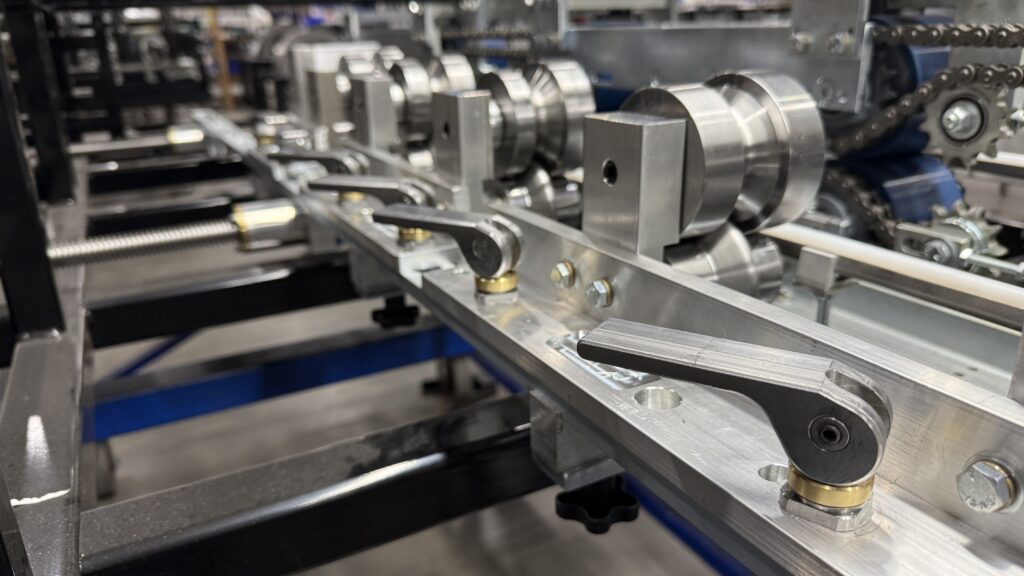
NTM portable rollformers can produce a wide range of panel profiles — snap-lock, mechanical seam, fastener flange, board and batten, flush wall/soffit, trapezoidal, T-panel, and the proprietary SSQ275 NewLock.
Each profile serves different applications: slope requirements, weather conditions, commercial vs. residential, and aesthetic preferences all factor into which profile is right for a job.
Adding new profile tooling to your existing NTM machine is one of the most cost-effective ways to expand your business and win more bids.
New announcement: You can now finance profile tooling directly through NTM’s online configurator — meaning the profile you’ve been missing doesn’t have to cost you another job.
New: Finance Profile Tooling Through NTM’s Configurator
Here’s the announcement you’ve been waiting for.
One of the most common reasons contractors don’t add new profiles is the upfront cost. Tooling isn’t cheap, and when you’re managing cash flow across multiple jobs, it’s easy to put it off. Meanwhile, you keep passing on jobs or watching them go to someone else.
That changes now. NTM has made it possible to finance profile tooling directly through our online configurator. You can build out your machine configuration, select the profiles you need, and finance the whole package — so the cost of tooling doesn’t have to be a barrier to winning the next job.
Think about what that means practically: the board and batten profile you’ve been putting off, the SSQ275 that would let you bid on both snap-lock and mechanical seam jobs, the flush wall profile that would let you upsell soffit and under-deck on every roofing job — all of it is now accessible without a large upfront cash outlay.
If you’ve lost even one job this year because you didn’t have the right profile, the financing option pays for itself. Head to NTM’s configurator to build your setup and explore financing options.
The Profile Problem Most Contractors Don’t Talk About
Here’s a scenario that probably sounds familiar: A customer calls, they want a specific profile — maybe a 2″ mechanical seam for a low-slope commercial building, or board and batten for a barndominium they’re building. You don’t have that tooling. You either pass on the job, scramble to find a workaround, or watch it go to a competitor who does have the right setup.
It happens more than most contractors want to admit. And for a long time, the answer was either “buy a whole new machine” or “eat the upfront cost of new tooling.” Neither option felt great.
That’s changed. NTM now offers financing on profile tooling directly through their online configurator. You can now choose and finance just the profile you need — so you stop leaving money on the table because your rollformer isn’t configured for the job.
The fact is, if you’re looking to expand your business, you need the right tooling for the jobs that are out there. Otherwise, opportunity is going to pass you by.
First, you’ll need to know what profiles are out there, what they’re good for, and how they can open up new revenue streams for your business. Let’s break it all down.
Understanding the Main Profile Categories
Snap-lock and mechanical seam are the two types of standing seam profiles. Both have distinct advantages, and the choice between them comes down to environmental factors, cost, and individual preference.
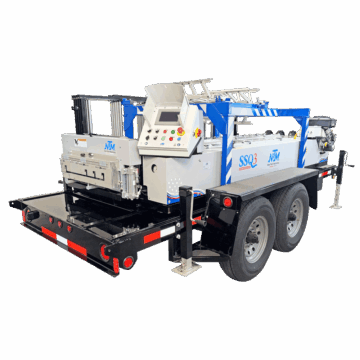
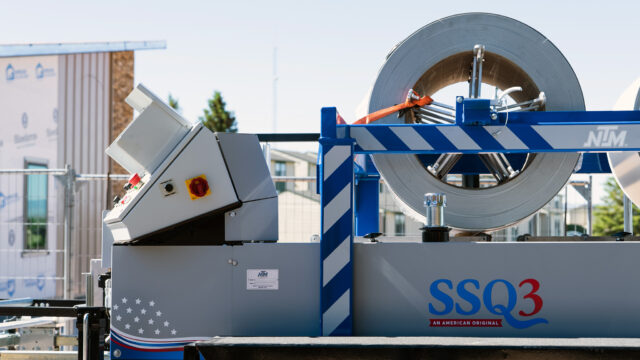
NTM’s portable rollformers — the SSR™ MultiPro Jr., SSH™ MultiPro, and SSQ3™ MultiPro — can produce a variety of standing seam panel profiles. The SSQ3 is the most versatile, capable of running up to 16 different profiles. Here’s a look at what’s available and how each one can work for your business.
What are Snap-Lock Profiles?
Snap-lock panels have a male and female leg that snap together during installation — no seamer required. They’re faster to install, require less labor, and are generally the more cost-effective option for your customers. They’re best suited for roof slopes of 3:12 and greater.
NTM snap-lock profiles include:
SS450 – 1.5″ snap-lock, available on SSQ, SSH, and SSR. One of the most popular residential profiles on the market. The clip wraps over the male leg, making installation straightforward and allowing for thermal movement.
SS450SL – Also 1.5″, but the panel snaps onto itself via a bump on the male leg. Uses different clips than the SS450, so keep that in mind if you’re running both.
SSQ550 – 1.5″ snap-lock, SSQ only. A structural profile capable of spanning open purlins. Good for high-wind and regions requiring maximum weather resistance.
SSQ675 – 1.75″ snap-lock, SSQ only. Also structural, with a taller seam height for added performance.
Best for: Residential projects, steep-slope commercial work, jobs where speed and cost efficiency matter most.
What are Mechanical Seam Profiles?
Mechanical seam panels have vertical legs that are seamed together using a hand or power seamer. They’re stronger, more watertight, and can be used on lower slopes — down to 2:12 and sometimes lower with sealant. They’re the go-to for commercial projects, storm-prone regions, and any job where the customer needs maximum performance.
NTM mechanical seam profiles include:
SS100 – 1″ mechanical seam, available on SSQ, SSH, and SSR. A clean, low-profile look that works well on residential and light commercial.
SS150* – 1.5″ mechanical seam, available on all three machines.
SSQ200* – 2″ mechanical seam, SSQ only. The standard commercial workhorse. Strong, proven, and widely specified.
SSQ210A (ARMCO-style) – Also 2″, SSQ only. Features an extra down leg that adds strength at the seam — popular in high-wind and severe weather markets. Both the SSQ200 and SSQ210A are made with the same roller set; you just need an extra roller to convert between them. Keep in mind the SSQ210A uses slightly more material per panel. Also, the SSQ210A is only recommended to go down to a 2:12.
*Best for: Low-slope commercial roofs, high-wind regions, mountain climates, any project requiring maximum weather resistance.
The SSQ275 NewLock: NTM’s Proprietary Two-in-One Profile
If you’re doing both residential and commercial work and want maximum flexibility without swapping tooling, the SSQ275 NewLock is worth a serious look. It’s NTM’s proprietary profile — developed in partnership with Karr’s Building Supply — and it’s the only profile on the market that can be snap-locked or mechanically seamed using the same tooling. It’s only available for the SSQ MultiPros.
Here’s what makes it unique: most mechanically seamed panels require you to rotate and interlock each panel before moving to the next, which is labor-intensive. The SSQ275 is designed so the female leg snaps over the male leg without rotating the panel. You can install the entire roof as a snap-lock, then go back and run the seamer if the job requires it. The single-lock seam on the SSQ275 is as strong as or stronger than most double-lock systems on the market.
SSQ275 specs:
2″ seam height
12″ to 24″ panel width
26 ga to 22 ga steel, or .024″ to .040″ aluminum
Compatible with SSQ machines
Optional ASTM, UL, and FM testing available through Karr’s Building Supply
Over 8,000,000 sq. ft. installed on schools, churches, government buildings, and more
Best for: Contractors doing both snap-lock and mechanical seam work who want one profile that handles both without a tooling changeover.
Fastener Flange Profiles: The Budget-Friendly Option
Fastener flange profiles are similar to snap-lock but are directly fastened to the roof deck through a flange on the male leg. They’re the most affordable standing seam option — no clips needed — and are popular on residential steep-slope applications.
NTM fastener flange profiles:
FF100 – 1″ seam, available on SSQ, SSH, and SSR
FF150 – 1.5″ seam, available on SSQ, SSH, and SSR
One thing to keep in mind: fastener flange profiles don’t always have engineered testing available, so they may not qualify for weathertight warranties. Clip relief rollers are recommended with both profiles to prevent fastener head distortion.
Best for: Residential steep-slope projects where cost is the primary driver and weathertight warranties aren’t required.
What is Board and Batten Metal Siding?
Board and batten metal siding mimics the traditional wood board and batten popular on homes and structures across the country. However, metal board and batten panels bring durability, protection against the elements, and affordability that wood cannot offer.
If metal board and batten siding isn’t in your catalog, you’re leaving money on the table. This is one of the fastest-growing segments in the metal panel market, and the demand is real — some manufacturers are filling B&B orders two to three times a week consistently.
NTM’s BB750 Board and Batten profile produces panels with a 2″-wide by ¾”-deep batten that covers the nail flange of the neighboring panel, just like traditional wood battens. It’s available for SSQ machines dating back to 2014.
BB750 specs:
10″ to 25¼” finished panel width (includes 2″ batten)
26 ga and 24 ga Grade 50 steel, or .027″ and .032″ aluminum
SSQ only
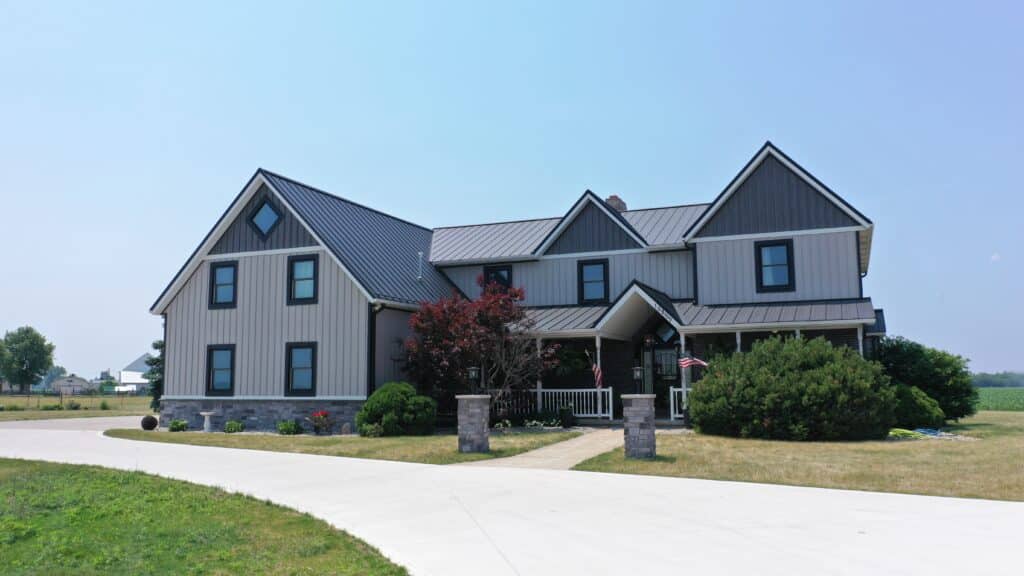
The applications are everywhere right now: modern farmhouse homes, barndominiums, commercial buildings, apartment complexes, even interior accent walls for restaurants and retail. With advanced coatings like woodgrain finishes, you can offer customers the classic barn look without the maintenance nightmare of real wood.
Metal board and batten also comes with a strong value proposition for your customers: 50+ years of life expectancy, no rot, no insects, fire resistance (which can save up to 20% on homeowners insurance in wildfire-prone areas), and 100% recyclability.
If you’re already running a standing seam machine, adding the B&B profile is one of the most straightforward ways to expand your revenue without buying new equipment.
Best for: Residential siding, barndominiums, agricultural buildings, commercial facades, any project where customers want the farmhouse aesthetic with metal durability.
Flush Wall, Soffit, and Under-Deck Panels: The Upsell You’re Missing
Here’s another opportunity that’s hiding in plain sight. If you’re already putting a metal roof on a building, why isn’t the soffit, fascia, and under-deck metal too? NTM’s flush wall and soffit profiles make it easy to offer a complete metal envelope — and your customers will appreciate the consistency.
NTM flush wall/soffit/under-deck profiles:
FWQ100 – 1″ flush wall/soffit/under-deck with adjustable reveal (0″ to 3″)
FWQ150 – 1.5″ version of the same profile
Both profiles are SSQ only, and both can be used as wall panels, soffit panels, or under-decking. An optional perforator adds ventilation holes for vented soffit applications. The adjustable reveal (in ½” increments up to 3″) gives you flexibility for different architectural looks.
Materials: 28 ga to 22 ga steel, .027″ to .040″ aluminum, or 16 oz to 20 oz copper Panel width: 12″ to 22″; up to 25″ coverage with 3″ reveal
Under-decking is particularly compelling — it transforms the space under an elevated deck from an exposed, wet area into a dry, usable space. Homeowners love it. And since you’re already on the job, it’s a natural upsell.
Best for: Soffits, fascia, under-deck systems, flush wall siding, architectural details around doors and windows.
Trapezoidal and T-Panel: Specialty Profiles for Specific Applications
TRQ250 Trapezoidal Profile
The TRQ250 is a 2.5″ mechanically seamed trapezoidal profile — the tallest seam in NTM’s lineup. It’s designed for commercial and industrial applications, most commonly storage facilities and large low-slope commercial buildings. It features an anti-capillary leg to help prevent water intrusion and comes with a specifically designed rib roller assembly for the 3″ wide trapezoidal bead ribs. SSQ II only.
T-Panel Profile
The T-Panel is unique in that it doesn’t require its own roller set — it’s built into the tooling for eight other standard profiles (SS100, SS150, SS200, SS210A, SS450, SS450SL, SS550, and SS675). Like the 1.5″ and 2″ mechanical seam, the T-Panel is commonly used on barrel or curved roofs. What makes the T-Panel different is that it’s easier to install and curve than a mechanical lock profile. Available on SSQ, SSH, and SSR.
Rib Rollers: A Low-Cost Way to Differentiate Your Panels
Rib rollers aren’t a profile themselves, but they’re worth mentioning because they’re one of the most cost-effective ways to add value to your panels. They sit just behind the shear on a separate frame and add decorative ribs to the flat field of the panel.
Types available:
Bead Ribs – Rectangular indentations, standard (1.05″) or wide (2″)
Pencil Ribs – Rounded, half-circle style, small (0.38″) or large (0.68″)
V-Ribs – Sharp V-shape, small (0.37″) or large (1.02″)
Striations – Wavy texture that’s especially effective at hiding oil canning
Clip Relief – Prevents clip or fastener heads from denting the panel
Beyond aesthetics, ribs add structural rigidity to the panel and can help hide minor coil defects or oil canning. For flush wall and soffit panels, NTM recommends small pencil or V-ribs for better stability.
How Adding Profiles Grows Your Business
The math here is pretty simple. Every profile you can’t produce is a job you might not win. And every job you can’t win is revenue going to a competitor.
Here are the most practical ways adding profiles expands your operation:
1. Bid on more project types. A contractor running only snap-lock profiles can’t bid on low-slope commercial jobs that spec mechanical seam. A contractor without board and batten tooling can’t bid on the barndominium boom that’s happening right now. More profiles = more bids = more revenue.
2. Upsell existing customers. If you’re already doing the roof, offering soffit, fascia, under-deck, and siding panels to the same customer is a natural extension. You’re already there. The equipment is already there. The incremental cost is just the profile tooling.
3. Offer “chop and drop” panel manufacturing. If you want to diversify beyond installation, you can manufacture panels and sell them to other contractors. It’s a way to generate revenue from your machine even when you’re not on a job site — and it can reduce your insurance costs if you’re strictly manufacturing rather than installing.
4. Compete in commercial markets. The SSQ200, SSQ210A, TRQ250, and SSQ275 profiles open the door to commercial and industrial projects that require stronger, more tested panel systems. Commercial jobs typically mean larger square footage and higher margins.
5. Differentiate with specialty profiles. The SSQ275 NewLock is a profile no other manufacturer offers. If you’re running it, you have something your competitors don’t — and that’s a real selling point.
How to Pick the Right Profile for a Job
Not sure which profile to spec? Here’s a quick decision framework:
How to Pick the Right Profile for a Job
Factor
Recommended Profile(s)
Roof slope below 2:12
Mechanical seam (SS150, SSQ200, SSQ210A)
Roof slope 3:12 or greater
Snap-lock (SS450, SS450SL, SSQ550, SSQ675)
Need both snap-lock and mechanical seam
SSQ275 NewLock
Commercial / industrial low-slope
SSQ200, SSQ210A, TRQ250
Barrel or curved roof
T-Panel
Siding, soffit, or under-deck
FWQ100, FWQ150
Farmhouse / barndominium aesthetic
BB750 Board and Batten
Budget-conscious residential
FF100, FF150 (fastener flange)
High-wind / severe weather region
SSQ210A, SSQ275 (seamed)
Also factor in your regional market. What profiles are commonly specified by architects and builders in your area? What are your competitors offering — and what are they not offering? That gap is your opportunity.
FAQs
What’s the difference between snap-lock and mechanical seam profiles?
Snap-lock panels have male and female legs that snap together during installation — no seaming tools required. They’re faster and cheaper to install but are limited to roof slopes of 3:12 or greater. Mechanical seam panels require a hand or power seamer to fold the panel legs together, which adds labor but creates a stronger, more watertight seam. Mechanical seam can be used on slopes as low as 2:12 (and sometimes lower with sealant), making it the right choice for low-slope commercial applications and severe weather regions.
Can I add new profile tooling to my existing NTM machine?
Yes. The SSR MultiPro Jr. and SSH MultiPro each run seven optional standing seam profiles that can be used interchangeably. If you own an SSQ II or SSQ3 MultiPro, you have access to up to 16 different profiles — including snap-lock, mechanical seam, board and batten, flush wall/soffit, trapezoidal, and the SSQ275 NewLock. Adding a new profile tooling set is significantly less expensive than buying a new machine, and you can now finance tooling through NTM’s online configurator.
What is the SSQ275 NewLock and why is it unique?
The SSQ275 NewLock is NTM’s proprietary 2″ standing seam profile that can be either snap-locked or mechanically seamed using the same tooling — something no other manufacturer offers. It’s designed so the female leg snaps over the male leg without rotating the panel, which speeds up installation. When seamed in a single-lock configuration, it’s as strong as or stronger than most double-lock systems. It’s compatible with SSQ machines and has optional ASTM, UL, and FM testing available. Over 8 million square feet have been installed on schools, churches, government buildings, and more.
How does adding metal board and batten siding help grow my roofing business?
Metal board and batten is one of the fastest-growing segments in the metal panel market, driven by demand for barndominiums, modern farmhouse homes, and commercial buildings that want the classic barn aesthetic with metal durability. If you already own an SSQ dating back to 2014, adding the BB750 board and batten profile is a relatively low-cost way to offer a high-demand product. It opens up siding work alongside your roofing business, lets you upsell existing customers, and positions you to serve a market that’s growing year over year. Some manufacturers are filling board and batten orders two to three times a week.
What profiles are available for soffit, fascia, and under-deck applications?
NTM’s FWQ100 (1″) and FWQ150 (1.5″) flush wall/soffit/under-deck profiles are available on the SSQ MultiPro. Both can be used as wall panels, soffit panels, or under-decking. An optional perforator adds ventilation holes for vented soffit applications. The profiles feature an adjustable reveal from 0″ to 3″ (in ½” increments), giving you flexibility for different architectural looks. Panel widths range from 12″ to 22″, with up to 25″ coverage at the full 3″ reveal. These profiles are a natural upsell for any roofing job — if you’re already putting on a metal roof, offering matching soffit and under-deck panels is an easy way to increase the value of the project.
Contact us or book an appointment to speak with one of our expert account managers.