NTM Customers’ ROI With a Portable Standing Seam Panel Machine
It’s easy for a manufacturer like New Tech Machinery (NTM) to say that you’ll boost your ROI using a portable standing seam machine vs. buying factory panels. But we’re not the ones running and installing metal panels.
In this article, you’ll hear directly from metal roofing contractors and panel manufacturers about their ROI with an NTM portable metal panel machine. Whether they’re running panels for installation or manufacturing panels for contractors, they’ll show you in real numbers the differences between owning a portable roof panel machine and buying factory panels or purchasing in-plant machines.
Table of Contents
- Can Contractors See More ROI Using a Portable Standing Seam Machine Vs. Buying Factory Panels?
- What’s a Metal Roofer’s ROI On a Portable Rollformer?
- Gunnison Sheet Metal
- Higher Ground Roofing
- Added benefits to using a portable standing seam machine:
- Quick FAQs
- What’s a Panel Manufacturer’s ROI On a Portable Rollformer?
- Classic Metals
- Added benefits for manufacturers using a portable standing seam machine:
- What’s the Downside to Owning a Portable Standing Seam Machine?
Can Contractors See More ROI Using a Portable Standing Seam Machine Vs. Buying Factory Panels?
The short answer is yes, absolutely.
As one NTM machine owner explained, if you’re paying $4.00 per sq. ft. for a factory-made panel, running that same panel with your own portable rollformer may cost you only $2.00 per sq. ft. That’s a savings of $2.00 per sq. ft. and doesn’t include what you’re saving on transporting panels to the jobsite.
What’s a Metal Roofer’s ROI On a Portable Rollformer?
Your ROI using a portable standing seam machine over factory panels can add up to tens of thousands of dollars or more in a single year.
Gunnison Sheet Metal
We spoke with Jim Averill, owner of Gunnison Sheet Metal.
Jim first bought our starter SSR™ MultiPro Jr. Roof Panel Machine, which sells for under $50,000. In three years, Jim completed 100 jobs and ran hundreds of thousands of linear feet. If Jim ran, say, 250,000 linear feet and saved $.80 per linear foot over what he would have spent on factory panels, that’s a total savings of $200,000. More than enough to pay off the machine and gain a snug profit.
And that’s a very conservative estimate. He’ll more likely have saved $1.50 – $2, which translates to a $375,000 to $500,000 return on investment over buying from a manufacturer.
All that, from our starter SSR MultiPro Jr. machine that runs seven optional standing seam profiles.
“Once I got the SSR, things really excelled. Having my own SSR really allowed me to manage the materials on the project and to open my Gunnison Sheet Metal business,” Jim said. “I have grown more than 1000%. New Tech allowed me to step out from living in my shop to being able to purchase a new home.”
Not long after, he invested in our highest-end portable rollformer, the SSQ II™ MultiPro Roof & Wall Panel Machine.
During one eight-week period, Jim ran over 30,000 linear feet through his SSQ II. He saved tens of thousands of dollars over buying factory panels and had complete control over his operation.
Plus, Jim didn’t have to worry about:
- Delivery delays
- Damaged panels
- Mistakes on orders
- Transportation costs
- Lengthy manufacturer lead times
Having his own portable standing seam machine allowed Jim to manage his operation on-site. He brought just the amount of material needed for the job, so there was less waste, and he cut out shipping costs as well. Also, he found there was less risk of damage to the panels when he could fabricate them right at the job site.
This past December, Jim ordered our latest flagship version, the SSQ3™ MultiPro. Now he’ll have three NTM machines and multiple crews out running panels and installing metal roofs. His business just keeps growing. As does his ROI.

Higher Ground Roofing
Ross McDermott of Higher Ground roofing won a bid to reroof the homes at the Lodge at Tamarron in Durango, Colorado.
Ross told us, “The total roofing is 200,000 ft² or 2,000 squares, so they gave us three years to complete this project. In one year, I’m 75% complete, and I could not have done that without the SSQ II on-site.”
What does that mean for Ross’s ROI? At the rate he’s going, he’ll finish the job in less than half the time. Ross will increase his revenue by running his own panels instead of buying factory-made ones. Also, he’s added a year and a half to his job schedule—bandwidth he wouldn’t have had if he’d taken the full three years.
That’s the ROI of investing in a portable standing seam machine. And it doesn’t stop there.
Added benefits to using a portable standing seam machine:
- Reducing material waste. Less waste means more money in your pocket.
- Eliminating manufacturer costs. Save dollars per panel by running your own.
- Minimizing downtime reduces labor costs.
- Removing order errors saves you time and money.
- Finishing jobs faster so that you can take on more work and increase your revenue.
Once I got the SSR, things really excelled…. I have grown more than 1000%.
Jim Averill, Gunnison Sheet Metal
Quick FAQs
What’s a Panel Manufacturer’s ROI On a Portable Rollformer?
An SSQ II owner in Utah uses his machine to supply metal panels to contractors. He doesn’t install, but he runs his machine seven to nine hours a day. In 2025, he ran 262,000 linear feet—out of a single NTM machine!
If he’s charging around $3.50 a panel, he’s bringing in $917,000. Subtract the cost of the coil per linear foot and the labor cost (one operator ran the machine), and you’re still looking at enough to cover the cost of the machine and a lot more.
And that’s just one year. They’re going on their fourth year with the SSQ II.
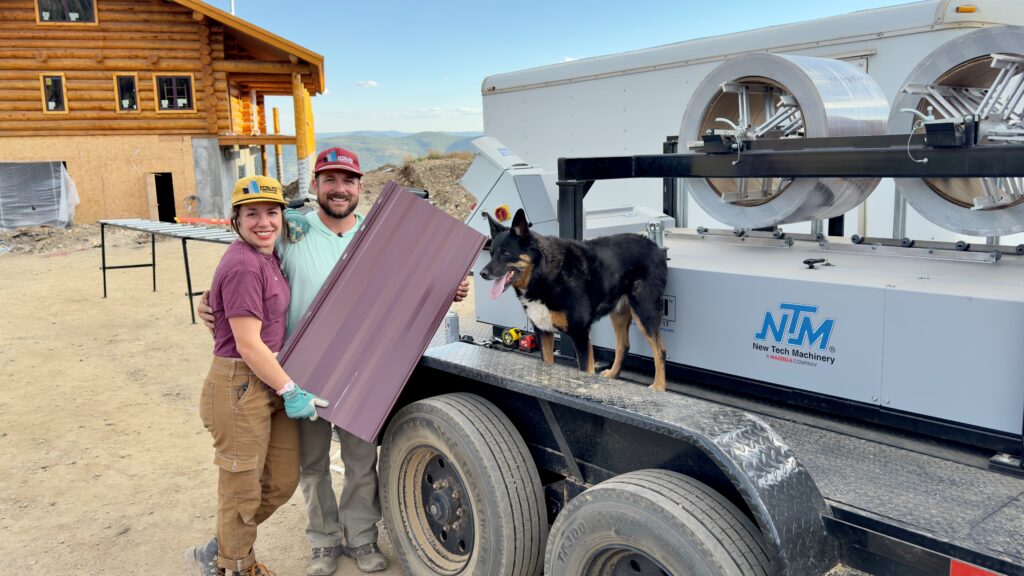
A metal panel manufacturer can run panels all day for contractors, and every inch that comes out of the machine produces profit.
Classic Metals
Todd Andrews, owner of Classic Metals in South Carolina, summed it up this way: “It’s basically a printing press. You just put coil on top of it, turn it on, and every foot that comes out, you’re making money.”
Todd’s plant uses four SSQ MultiPros to run panels for contractors and DIY homeowners. His business philosophy is simple: Produce a quality product, charge a fair price, and the earning potential is unlimited.
“New Tech has made it very easy to have a comfortable life and pay for my kids’ college,” Todd said.
Another NTM customer figured out a different angle to increase his ROI. He built a profitable business by leveraging NTM portable rollforming machines: they source metal coil from distributors, fabricate finished panels in-house, and supply them back to the same coil supplier for fabricated panel orders. Basically, the coil supplier who also sells manufactured panels is outsourcing the fabrication process.
Here’s the irony: The NTM customer fabricates the panels, then sends them back to the manufacturer who marks up the price and sells them to roofing contractors (like you, if you’re buying factory panels). This is where contractors (like you) lose money. While they could run their own panels for $1.50 per square foot, they’re instead paying a distributor $3- $5 per square foot for panels fabricated with an NTM portable rollformer.
So why not buy your own NTM machine and increase your ROI, instead of increasing someone else’s?
Added benefits for manufacturers using a portable standing seam machine:
- Cost savings: Use the portable rollformer as an in-plant machine. You’ll save hundreds of thousands of dollars over buying an in-plant machine.
- Efficiency: Profile changeovers are fast with a portable rollformer, especially with NTM’s new QWIKSwap™ tooling (available only on the SSQ3), which can changeover in around twenty minutes. An in-plant machine could take one or two days to change tooling.
- Portability: Bring your machine on-site for chop-and-drops.
- Less footprint: You don’t need a giant shop to house a portable rollformer. Unlike an in-plant machine, it doesn’t take up much space.
It’s basically a printing press. You just put coil on top of it, turn it on, and every foot that comes out, you’re making money.
Todd Andrews, Classic Metals
What’s the Downside to Owning a Portable Standing Seam Machine?
Like anything in life, there are no guarantees. Purchasing a portable standing seam machine requires a serious investment. You’ll also have equipment, accessories, and maintenance costs. Fortunately, NTM can help you finance with manageable monthly payments.
Also, it’s up to you to learn your market, establish a customer base, and manage your books. We only make the machines.
We recommend two things for sure:
- Get the proper training. When you purchase an NTM machine, training at our facility in Aurora, Colorado is free. Bring your entire crew. It will be worth it for everyone to know how to operate the machine safely and efficiently, and how to maintain it so that it keeps on running for years to come.
- Learn the business side. It’s not enough to know how to run the machine. If you already own a metals or roofing business, you’re most of the way there. But if you’re an installer just starting out, there are resources available to teach you how to manage and market your operation, and track costs, orders, revenue, etc.
In the next article, we’ll show you how to determine your own ROI. If you’re buying panels, we’ll show you in real job numbers how much you’ll save by running your own panels on a portable rollformer.
To find out more about our portable roof and wall panel or seamless gutter machines and accessories, contact us. An experienced account manager will be available to answer your questions.